Mixture of Experts, Explained
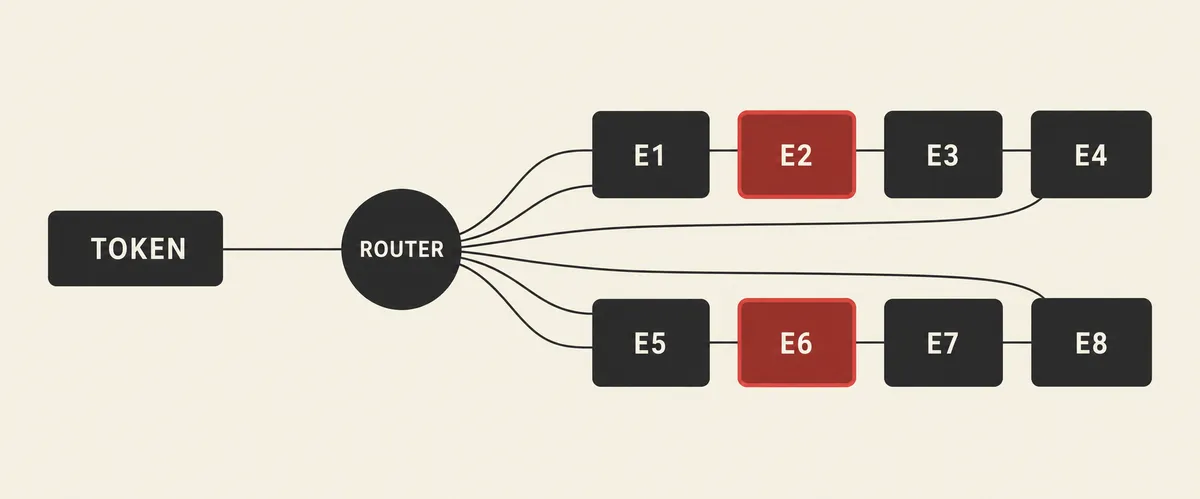
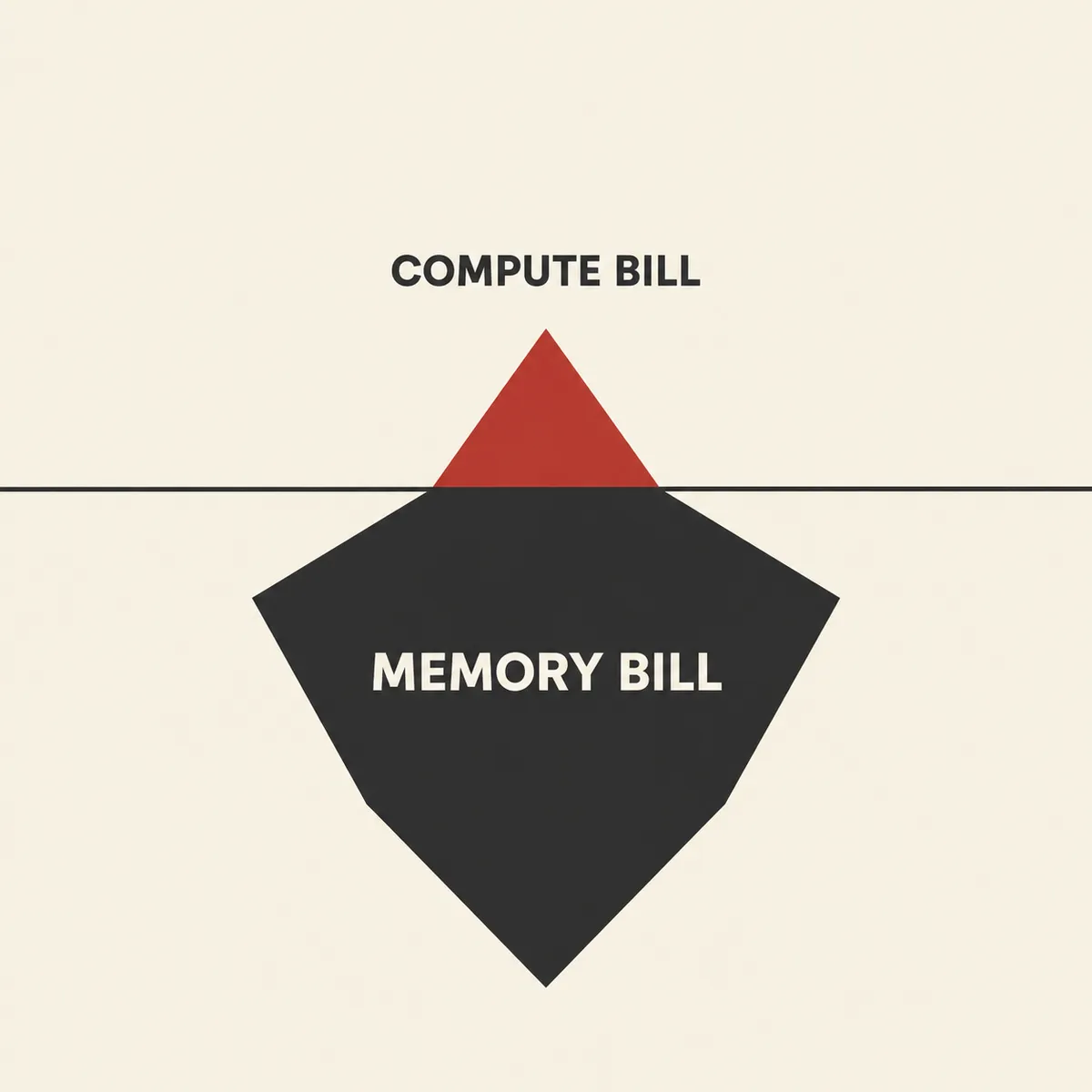
Every frontier model now has the same superpower: a brain far bigger than the part that wakes up for any given word. Mixture of Experts is the trick that made that possible. Instead of one giant network thinking about every token, a tiny router picks a few specialist networks per token, and the rest stay dark. This primer covers the router, top-k routing, the active-vs-total parameter gap, and the catch everyone learns the hard way: MoE saves compute, not memory. The sentence to remember: it buys a bigger brain for the same compute bill, then hands you the memory bill.
1. The brief
For years, making a model smarter meant making it bigger, and paying for every parameter on every token. Mixture of Experts breaks that deal. An MoE layer replaces the single feed-forward block with a panel of smaller expert networks plus a router, a tiny gating network that scores every expert for each token and fires only the top few. The result is a model with the knowledge capacity of a giant and the per-token compute cost of a much smaller one. Kimi K3 stores 2.8 trillion parameters but activates only about 104 billion per token. Mixtral 8x7B stores 46.7 billion and activates 12.9 billion. The idea is from 1991, the sparse version is from 2017, and by 2026 nearly every open-weight frontier model is an MoE. The trap is that all of those experts have to live in memory at once, so the savings are compute, not VRAM.
2. How it works
Six mechanisms, each doing one job. Tap each card for the plain-language version, one concrete example, and what changed recently.
The token routing playground
Tap a highlighted token in the sentence, or step through with the arrows. The router scores all 8 experts and fires the top 2. The scores are illustrative; real routers learn theirs from data.
This token: 2 of 8 experts firing · 12.9B of 46.7B parameters active (about 28%) · inference speed and cost of a 12.9B model (figures from Mistral AI's Mixtral announcement).
3. The landmarks
Eight moments that built the idea, 1991 to 2026. One tap per step, or use the arrow keys.
4. Key voices
Five people and teams who built this, shipped it, or poked holes in it. The real action is at the bottom, where two of them collide.
The big disagreement
Same idea, opposite conclusions. One switch, every tap flips. No picking sides, just the collision.
Routing to a single expert cannot work. In the original sparsely-gated MoE paper, Shazeer and co. conjectured that routing to more than one expert was necessary, because the router needs at least two experts to compare in order to get a useful gradient. Learning to route, they argued, requires a choice. arXiv:1701.06538
Where it landed: the field mostly settled on top-2 and beyond, but Switch's lesson stuck. Start with the simplest routing that works, and let the ablations argue.
5. Where leaders think this goes
Where the builders agree, and where they split into named camps. Each item is one leader's vision for where MoE goes over the next 5 to 10 years: who said it, where, when. Predictions go stale; this section is frozen as of October 2026.
Takeaways
MoE is how the industry broke the link between how much a model knows and how much each token costs. A tiny router scores every expert per token, fires the top few, and leaves the rest dark. The price of that deal is memory: every expert has to live in VRAM at once. Almost every open-weight frontier model now pays it.
- The router is the whole game. Top-k scoring plus a weighted sum is simple; keeping every expert alive through load balancing is the hard part.
- Read two numbers on every model card. Total parameters are the memory bill; active parameters per token are the compute bill.
- Compute savings, not memory savings. The router cannot know which experts it needs before seeing the token, so all of them stay resident.
- One expert can be enough. Switch Transformer proved k equals 1 works; the field mostly uses top-2 and up, but simplicity won the argument.
- Watch the serving layer. The next hard problems are all-to-all communication and expert verification, not raw expert counts.
Keep exploring
Sources
Every factual claim in sections 2 through 5 traces to one of these.
MoE did not make models cheaper. It made a particular kind of bigger model affordable, and almost every frontier lab decided that trade is worth it.