How Frontier Labs Change Agents Without Breaking Them
On October 10, 2026, Lauren Tan posted that pstack, her agent skill stack, is now 10% smaller with no loss in behavior. A great claim, and an uncheckable one, unless you know the machinery behind it. The frontier labs all converged on the same answer: small golden task suites run on every change, deterministic checks before LLM judges, paired before/after diffs on frozen task sets, and the statistics to know when a suite is too small to prove anything.
1. The brief
Every change to an agent is a regression risk: a trimmed prompt, a rewritten skill, a swapped model, a new tool. The labs treat agent configuration the way good teams treat code, with a test suite that must stay green. Anthropic runs evals on every CLAUDE.md, skill, or hook change. OpenAI's skill recipe starts at 10 to 20 prompts. DeepMind pins the harness before comparing anything. Meta grades what the agent changed in the world, not what it said.
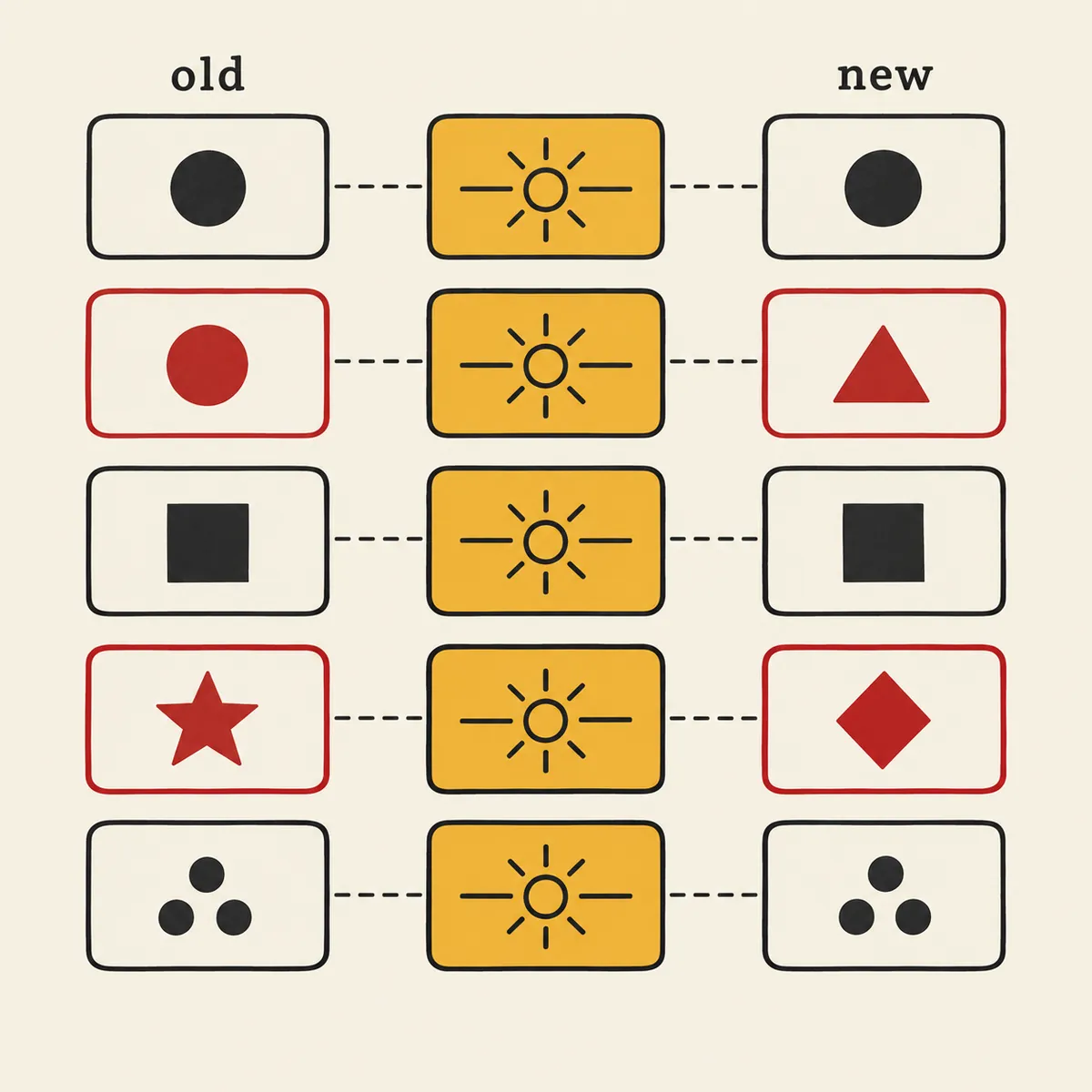
And the honest part: even the labs ship regressions. In April 2026 Anthropic published a postmortem about three config-layer regressions that reached users over six weeks, including two innocent-looking prompt lines that sailed through weeks of testing and later showed a 3% eval drop under per-line ablation. The machinery does not make you infallible. It makes failures findable. The sentence to remember: a regression suite should sit near 100% pass, and any decline means something broke.
2. How it works
Six mechanisms, and every lab uses all six. Tap each card for the plain-language version, one concrete example, and what changed recently.
The suite-size dial: what can your evals actually see?
Small suites are the industry standard, and they are nearly blind to small regressions. Drag the dial to set your golden-suite size and see the smallest pass-rate drop it can reliably detect.
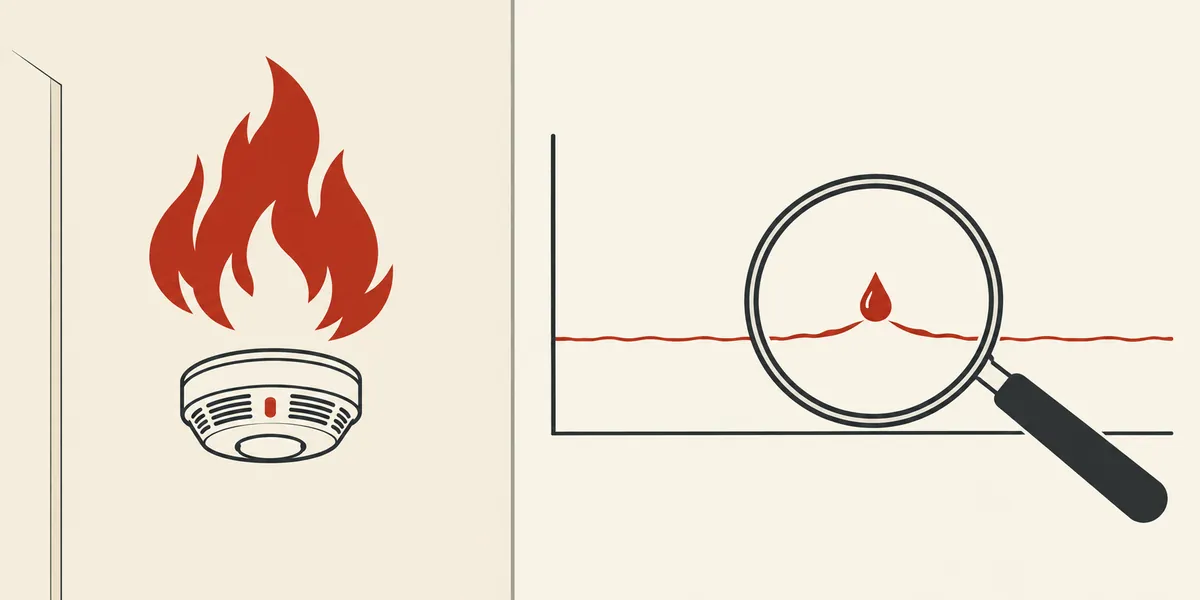
Illustrative model anchored on Evan Miller's figures: detecting a 3-point true delta needs about 969 cases at standard power. The takeaway is the shape, not the decimals. Small suites are smoke alarms: they catch fires, not slow leaks. That is why the labs pair tiny suites with per-item diffs and repeated trials.
Worked example: catching a regression with no judge
Skill: pdf-summarizer. One eval case, fully worked: the prompt, four deterministic checks, run against the old skill and a trimmed version. Tap a version to see the checks flip. Illustrative example built from OpenAI's eval-skills recipe.
3. The landmarks
Ten moments that built the discipline, January 2023 to October 2026. One tap per step, or use the arrow keys.
4. Key voices
Seven sources that define how this is done The real action is at the bottom, where two of them collide.
The big disagreement
Same field, opposite conclusions about small suites. One switch, every tap flips. No picking sides, just the collision.
"You don't need a large benchmark to get value from evals. For a single skill, a small set of 10 to 20 prompts is enough to surface regressions and confirm improvements early." The suite is a living record of scenarios the skill must keep getting right, grown from every manual fix during development.
The synthesis both sides would accept: a 15-case suite is a smoke alarm, not a proof. It catches big breaks fast and cheap. For the small stuff, run paired per-item diffs on frozen sets, repeat trials per case, and read Miller before claiming "no loss in behavior."
5. Where leaders think this goes
Every item below is attributed: who said it, where, when. Frozen as of October 2026.
Where they agree
Where they split
Four separate bets, each carried by a single voice. None of them lines up with the others, and the last one has no voice behind it at all.
Takeaways
No test suite can prove a negative, but the labs have turned "no regressions" from a vibe into a checkable claim. Small golden suites catch big breaks fast and cheap. Paired statistics catch the slow leaks the suites cannot see. CI gates and gradual rollouts catch everything else. Lauren Tan's 10% claim is credible exactly to the extent that machinery sits behind it, and now you know what that machinery looks like.
- Build the suite from real failures. 10 to 20 cases per skill, 20 to 50 per agent, with negative controls for what must not trigger. Every production incident becomes a permanent case.
- Split the two jobs. Capability evals are a hill to climb; regression evals must sit near 100% pass, and any decline means something broke.
- Deterministic checks first. Parse the trace and assert what actually happened. LLM judges only where deterministic checks cannot reach, calibrated against human labels.
- Diff paired items, not averages. Same frozen set, per-item deltas. A 15-case suite cannot see a 3-point slip; know your minimum detectable effect before claiming nothing broke.
- Gate and roll out gradually. A pass-rate drop gets reviewed before it merges, and intelligence-trading changes soak before they ship to everyone.
Keep exploring
Sources
Every factual claim in sections 2 through 5 traces to one of these. Figures are vendor-reported unless noted.
- X post"pstack is now 10% smaller with no loss in behavior!"
- Engineering blogDemystifying evals for AI agents
- BlogThe AI-native SDLC playbook
- PostmortemAn update on recent Claude Code quality reports
- ResearchAdding Error Bars to Evals
- Developer blogTesting Agent Skills Systematically with Evals
- DocsEvaluation best practices
- Repoopenai/evals
- DocsGemini 3.6 Flash eval methodology
- PublicationARE: Scaling Up Agent Environments and Evaluations
- RepoMETR Vivaria
- BlogMeasuring AI ability to complete long tasks
- BenchmarkSWE-bench
- BenchmarkTerminal-Bench
- EssayYour AI Product Needs Evals
- BenchmarkARC Prize
Small suites catch fires. Statistics catch slow leaks. Run both.